The School of Athens Experience
(Screen shot of the experience from unreal engine, the final results will be a ppt style video)
Animated Powerpoint Examples
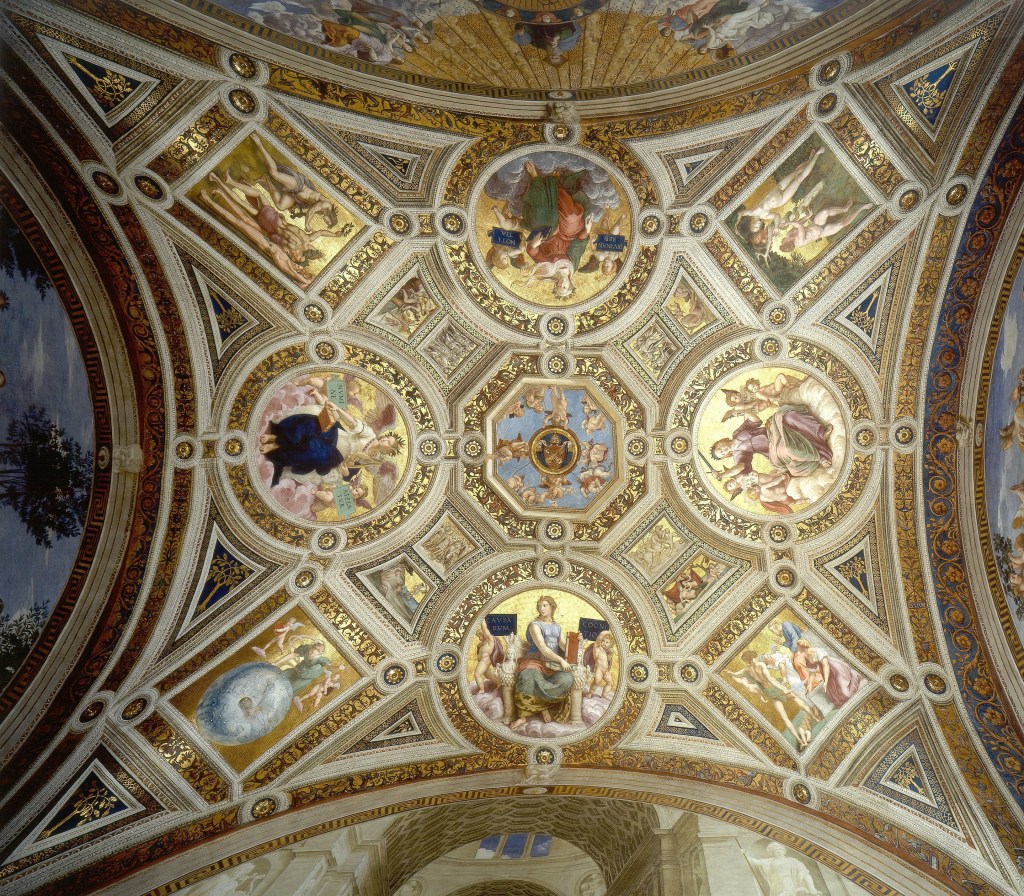

(A series of conversations will also be shown in the final results of the ppt style video)
Traditional Textbook Experience
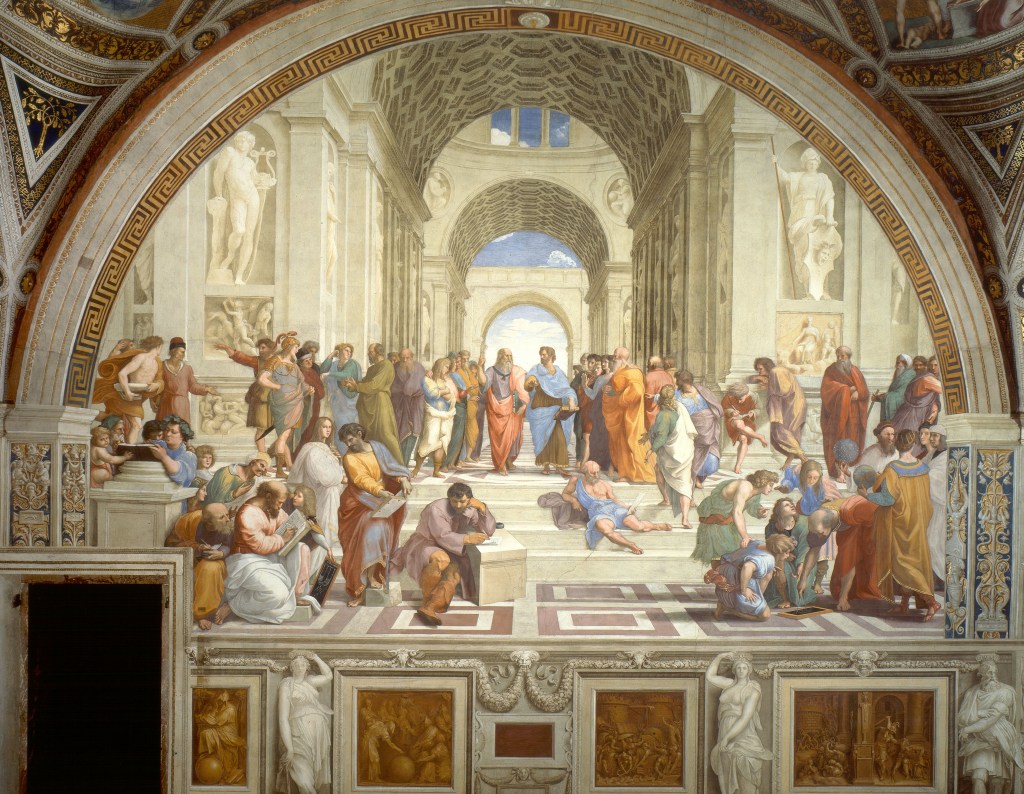
The School of Athens (Italian: Scuola di Atene) is a fresco by the Italian Renaissance artist Raphael. It was painted between 1509 and 1511 as part of a commission by Pope Julius II to decorate the rooms now called the Stanze di Raffaello in the Apostolic Palace in Vatican City.
The fresco depicts a congregation of ancient philosophers, mathematicians, and scientists, with Plato and Aristotle featured in the centre. The identities of most figures are ambiguous or discernable only through subtle details or allusions; among those commonly identified are Socrates, Pythagoras, Archimedes, Heraclitus, Averroes, and Zarathustra. Additionally, Italian artists Leonardo da Vinci and Michelangelo are believed to be portrayed through Plato and Heraclitus, respectively. Raphael included a self-portrait beside Ptolemy. Raphael is the only character who is looking directly at the viewer in the artwork.
The painting is notable for its use of accurate perspective projection, a defining characteristic of Renaissance art, which Raphael learned from Leonardo; likewise, the themes of the painting, such as the rebirth of Ancient Greek philosophy and culture in Europe were inspired by Leonardo’s individual pursuits in theatre, engineering, optics, geometry, physiology, anatomy, history, architecture and art.
The School of Athens is regarded as one of Raphael’s best-known works and has been described as his “masterpiece and the perfect embodiment of the classical spirit of the Renaissance”.
Chinese Ink Painting Experience
(Screenshot example of the experience from unreal engine, the final results will be an animated style video)
Animated Powerpoint Examples

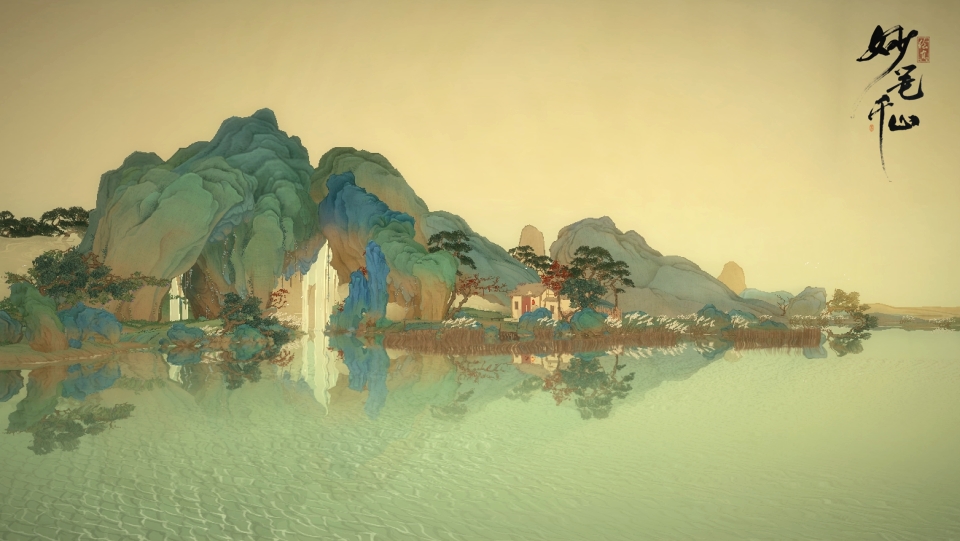


Traditional Textbook Experience

A Thousand Lis of Rivers and Mountains
At the end of the Northern Song Dynasty (960-1279), China faced a series of problems. The court was corrupted, the national military force was extremely weak, and society was becoming unprecedentedly conservative. In a word, the whole country was in severe crisis. However, in the same period art was developed at extremely high speed due to a series of art and culture policies initiated by Emperor HuiZong, who himself is a great artist. There are many great artworks in this period, and one of the most famous paintings is A Thousand Lis of Rivers ad Mountains, 千里江山图. It was completed in 1113 when the artist, Wang XiMeng 王希孟, was only 18 years old. This painting was done on silk.
Wang XiMeng is one of the most famous artists of the Northern Song Dynasty (960-1127). At the age of ten, he started learning landscape painting, but soon, he was sent to serve Emperor Huizong of the Song Dynasty. Emperor Huizong believed Wang Ximeng was very talented and personally taught Wang XiMeng a lot of painting techniques. After a few months of study, Wang was offered the opportunity to visit and paint the famous mountains and great rivers in China. Gradually, he started to specialise in free-hand landscape painting and established his unique art style. Very soon, his art achievements surpassed those of Zhang Zeduan (张择端), another famous artist in developing Chinese Shanshui landscape painting. The young Wang XiMeng became very ambitious and was determined to add some brilliant elements to the Chinese painting art. This is probably the background of how he created this fantastic artwork at such a young age.
A Thousand Lis of Mountains and Rivers is a scroll of 11.9 meters long and is divided into six parts. The painting depicts the greatness of mountains and rivers using many Prussian blues. Thanks to the mineral pigments used for this painting, this painting still looks very vivid and bright after almost 1,000 years. (You might be interested in reading inkston article on Chinese painting/ Sumi E colour mixing chart.) The artist applied traditional painting techniques and the style of the Sui and Tang Dynasties. The whole work is extremely magnificent and splendid. The waterfall flows gently down the mountain cliff; the fisherman drifts his boat gently on the lake; children are playing happily on the grass. In fact, if you look at the painting carefully, there are a lot of fine details. There are well-proportioned houses, quiet fishing villages and ancient long bridges and so on. Applied with fine pigments, the whole work is not only well-structured, but also very vivid and colourful. For example, the colours mostly used for this painting are: Azurite blue, Malachite green, Pearl white and black.
 Site Title
Leave a comment